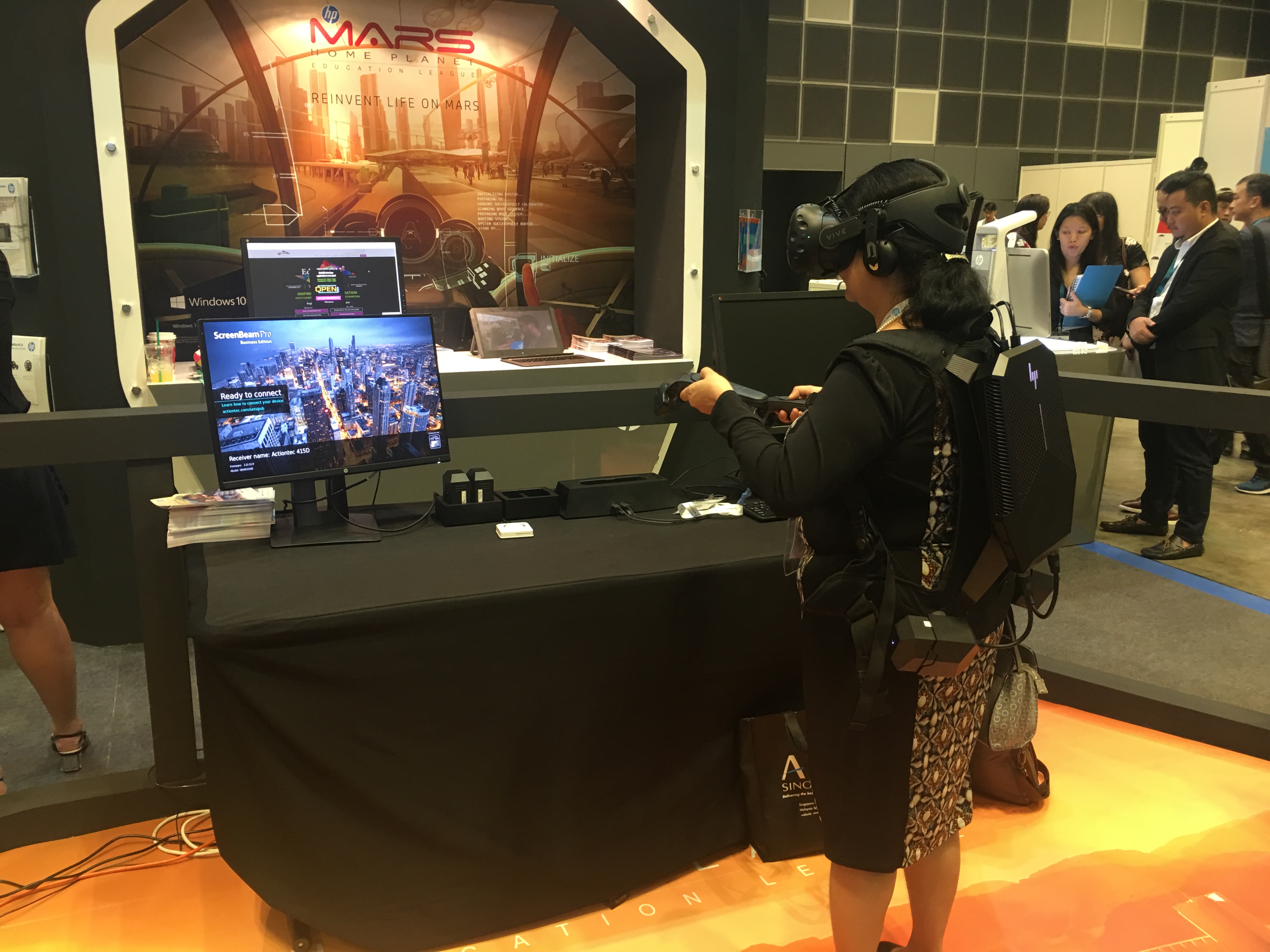
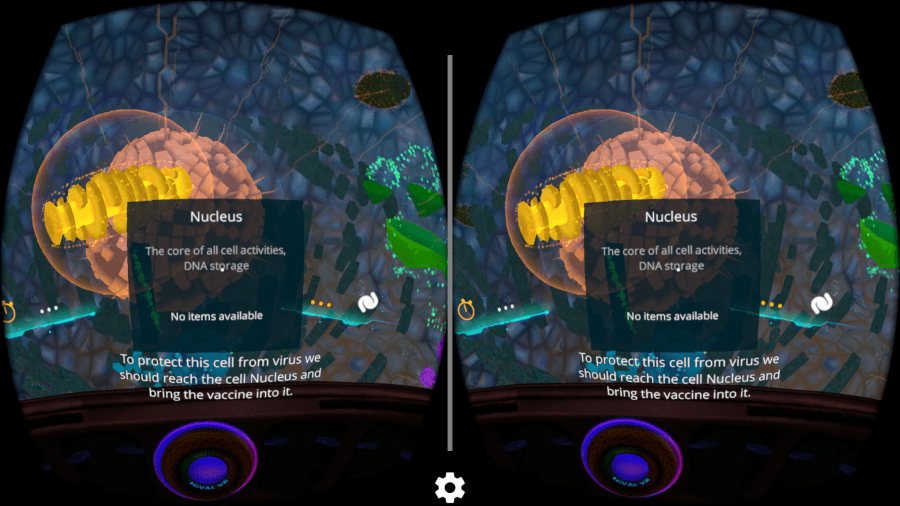
Imagine that you could go inside the bloodstream and explore cells and viruses, or go to outer space and land on Mars. These things are far beyond reach in the four corner of the classroom. But with the aid of technology, whether we wanted to visualize and experience the tiniest particle or go miles away from the Earth, the Virtual Reality technology, commonly known as VR, makes it possible to facilitate erudition and give students a new engaging way to learn.
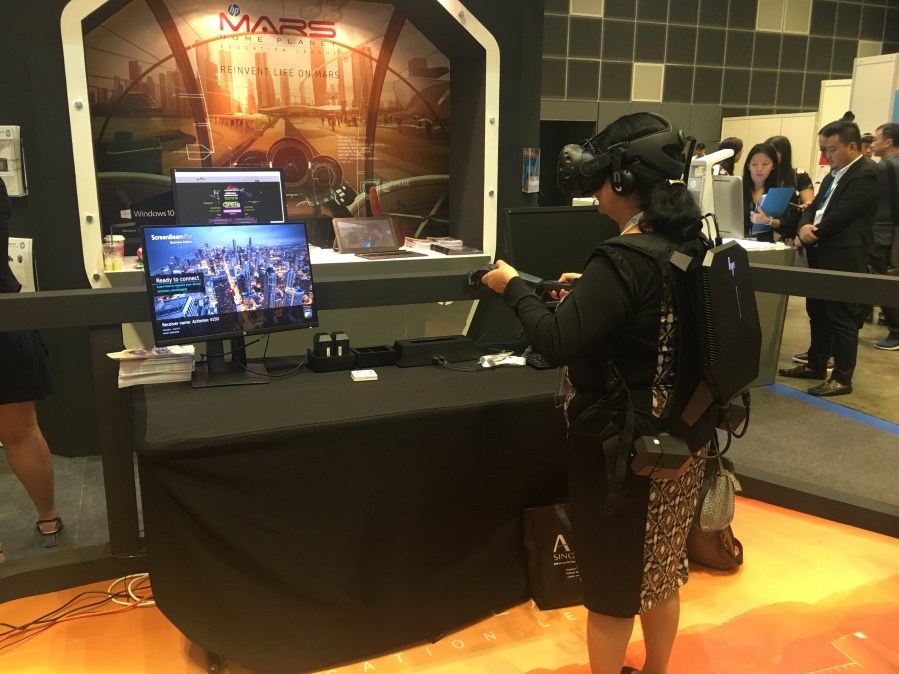
But how did VR begin?
The first attempt in creating VR dated back in 1838 when the stereoscopes were built by Charles Wheatstone. Later on, William Gruber’s View-Master stereoscope was used for “virtual tourism” in 1939. With the rise of electronics and computer technology in the 20th Century, major development in this technology took place. However, it was not since 1987 that Jaron Lanier, founder of the visual programming lab (VPL), coined the term “virtual reality.”
Virtual Reality technology were used as flight simulator, in arcade-style theater cabinet, and arcade games and machines.
Virtual Reality in the 21st Century Education
With the rise of integration of technology in the classroom, more and more educators try to find innovative solutions in creating an engaging and motivating atmosphere while learning.

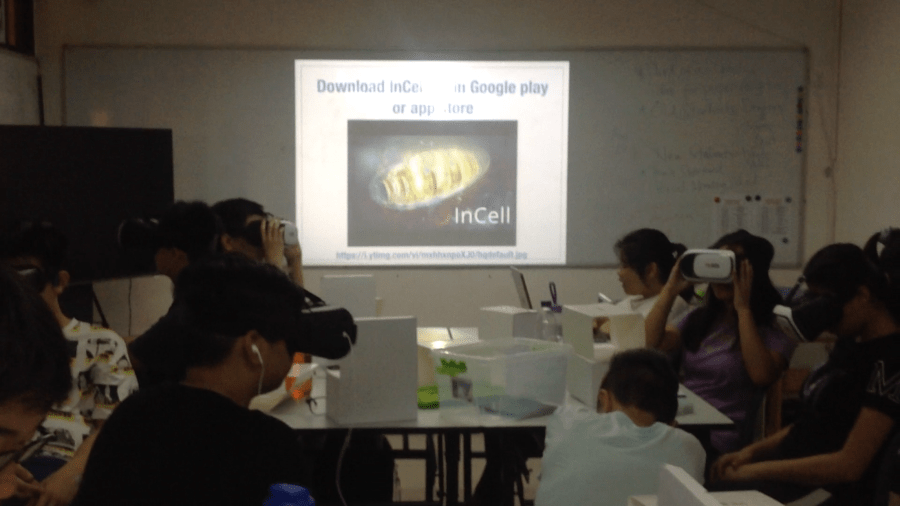
Companies such as Google, developed Google expeditions and created a low-cost DIY Google cardboard. This let students experience a field trip to different places on Earth, either above or below the surface. Another application, Discovery VR, which like Google is also free to download gives students opportunity to discover and explore even the most difficult place or area to visit.
What is the difference of VR to images or videos on-screen?
Various researches are being conducted to determine the effectiveness of Virtual Reality, as educators does not want to have this technology JUST as a getaway to make the class FUN.
Since 2008, Shailey Minocha, professor of learning technologies and social computing at the Open University in UK, is leading a team to study utilizing 3D and virtual worlds. From years of research and study, their team found out the following:
- a higher number of more complex and analytical questions were being asked by students who used technology in addition to pictures, texts, or newspaper articles
- it could boost engagement, especially for students with teaching assistants and those who have special needs
Furthermore, virtual field trips also make it possible to experience activities and locations that may be impossible, or extremely difficult, to arrange in real life.
How it is being used in education?
Educators are currently using Virtual Reality conduct field trips in their Social studies or Geography classes. The human body and space exploration could also be done to facilitate Science lessons. Storytelling in English classes can also be used to make the learning experience more creative. VR is also utilized to teach CPR and other technical skills in medical institutions for training.
Today, Virtual Reality is changing the way we learn and interact with and control computers. It may have some pitfalls and future drawbacks, but we cannot help the fact that technology is bringing unimaginable reality. Educators should be geared with the latest technology and be able to hand-over to students the learning they should get in this ever-changing world.
Read these to learn more about Virtual Reality in Education:
The Science of Virtual Reality
Investigating the role of virtual reality in Science and Geography in schools via Google Expeditions
Are you interested in teaching or learning with Virtual Reality? Teach in VR is the place to connect with others passionate using VR in education. Signing up will give you access to the latest news, apps, strategies and classes in Virtual Reality. Sign up here.
References:
Morlin-Yron. (2017). Students swim with sharks, explore space, through VR. CNN. Retrieved from http://edition.cnn.com/2017/09/18/health/virtual-reality-schools/index.html
Virtual Reality Society. (n.d.). History Of Virtual Reality. Retrieved from https://www.vrs.org.uk/virtual-reality/history.html
The Open University. (2016). Teaching in Virtual Reality. Retrieved from https://www3.open.ac.uk/media/fullstory.aspx?id=30596#
 MITCHEL AFRICA