After six months of remote learning through virtual conferencing in synchronous and asynchronous set-up, we finally opened the physical school and we are back in the classroom. This entire online teaching and learning was a rollercoaster ride for both the teachers and the students.
Teacher: Hello students, can you hear me?
Student: How to submit the assignment in Teams?
Teacher: Can you see the screen I am sharing?
Student: Teacher I cannot hear the audio?
Teacher: Hello everyone, kindly open your camera and we are going to read aloud.
It was not just a challenge for teaching and learning, but it entails technical know-how on how to utilize digital platforms from the basic to a more advance one (if you wanted to boast your online classroom to your students or colleagues, or to simply just create a more motivating and engaging virtual class). However, this whole pandemic-initiated-shift to an entirely different pedagogy in teaching also unbarred the essentiality of being responsible users and creators in the digital learning environment. As students and teachers are glued on screen for three to six hours a day, we are puzzled on how we can protect the students and teachers identity online. There are issues on privacy and security in using virtual conferencing and on the safety of the personal data in using the learning platforms for remote learning.
We have realized the importance of teaching Digital Citizenship more than ever.
In the first week of our term, I decided to open the year with some lessons and activities about Digital Citizenship to my students.
MEME THE CLASSROOM
In this activity, students were provided with Meme templates and a specific class rule. Students were asked to come up with their memes for classroom rules.
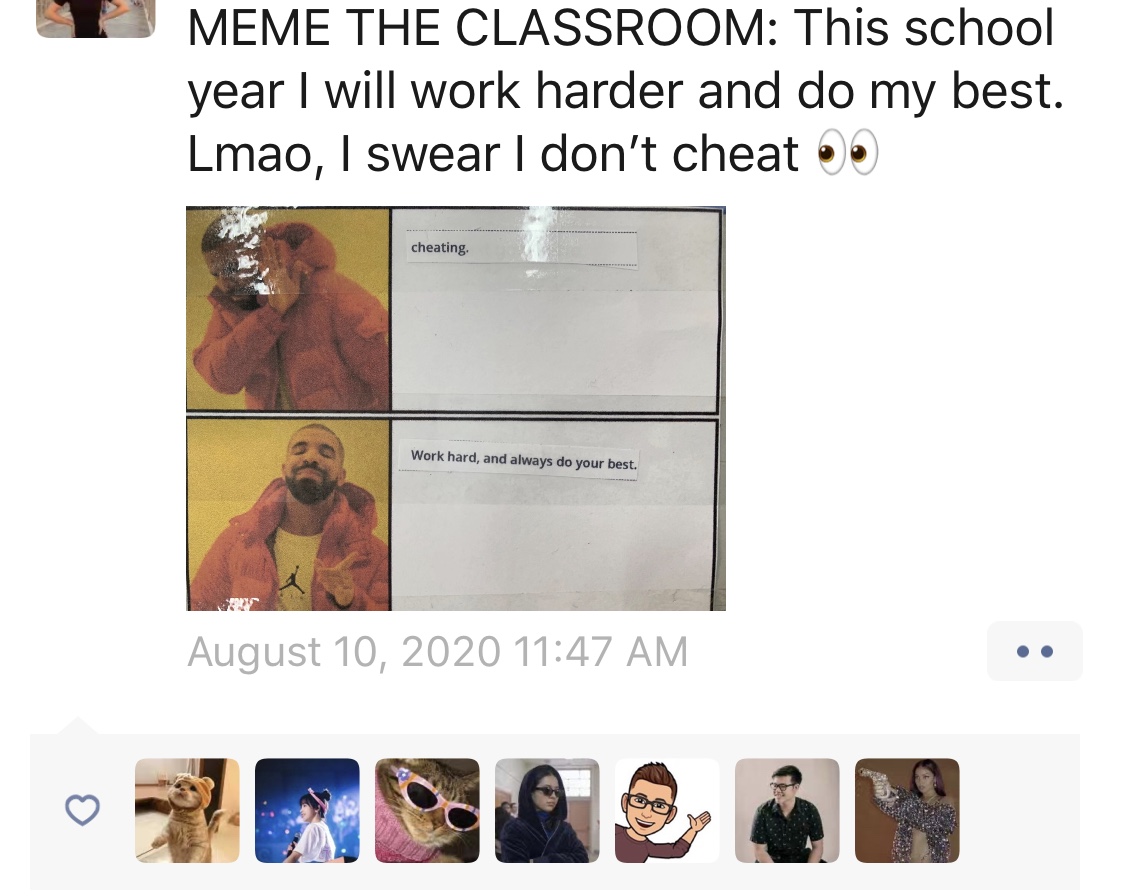
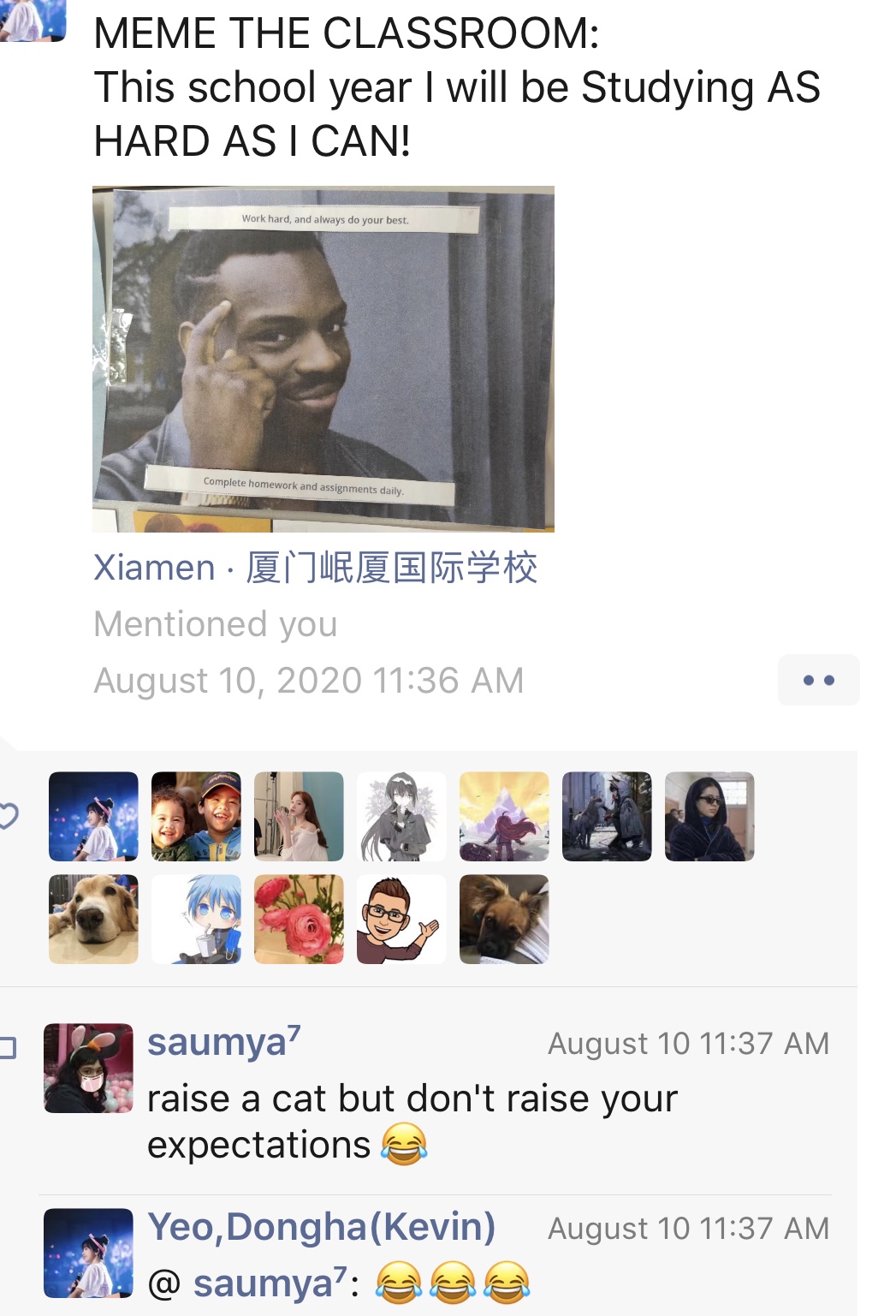
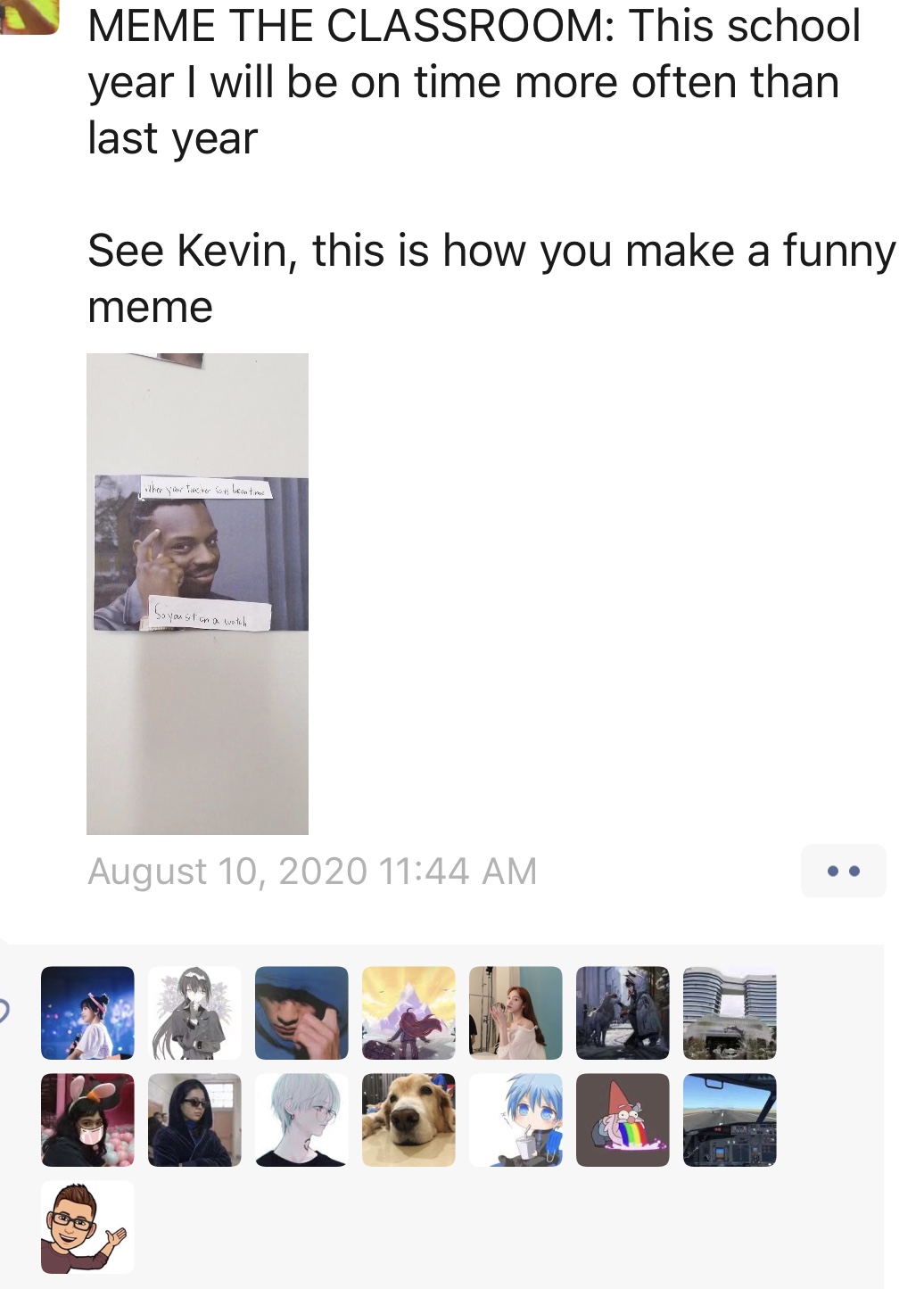
Check out the Icebreaker activity from 3P Learning.
Then, I ask my students to post it in their Digital Portfolio and T-A-G one or two of their classmates. A student asks if it is safe for them to use these photos, which they do not own and post them online. And then I opened the importance of honoring the creator and protecting one’s creation thru copyrights.
I showed them a lesson I created for the Kakuma Project, where I made offline learning materials for students in the refugee camp in Africa.
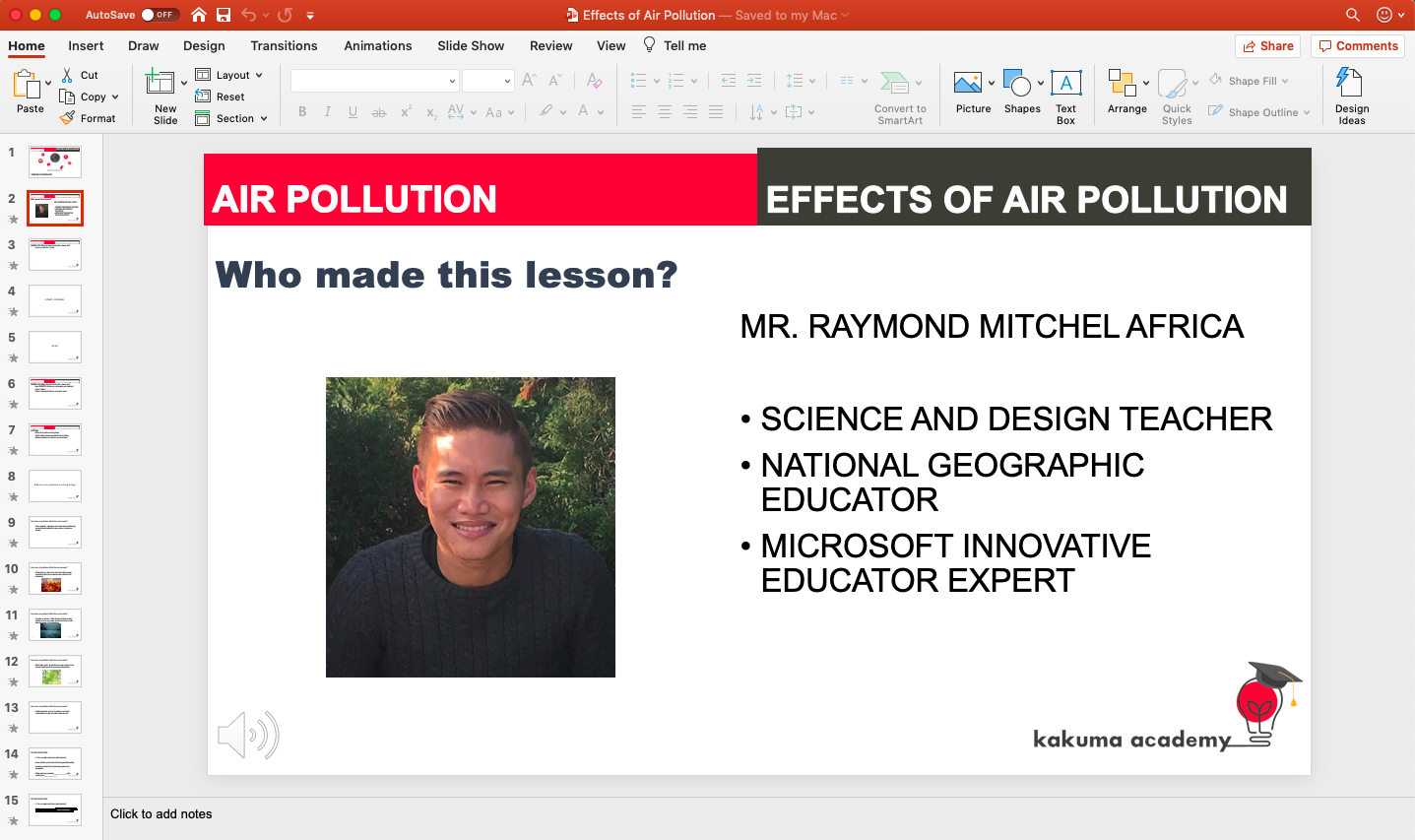
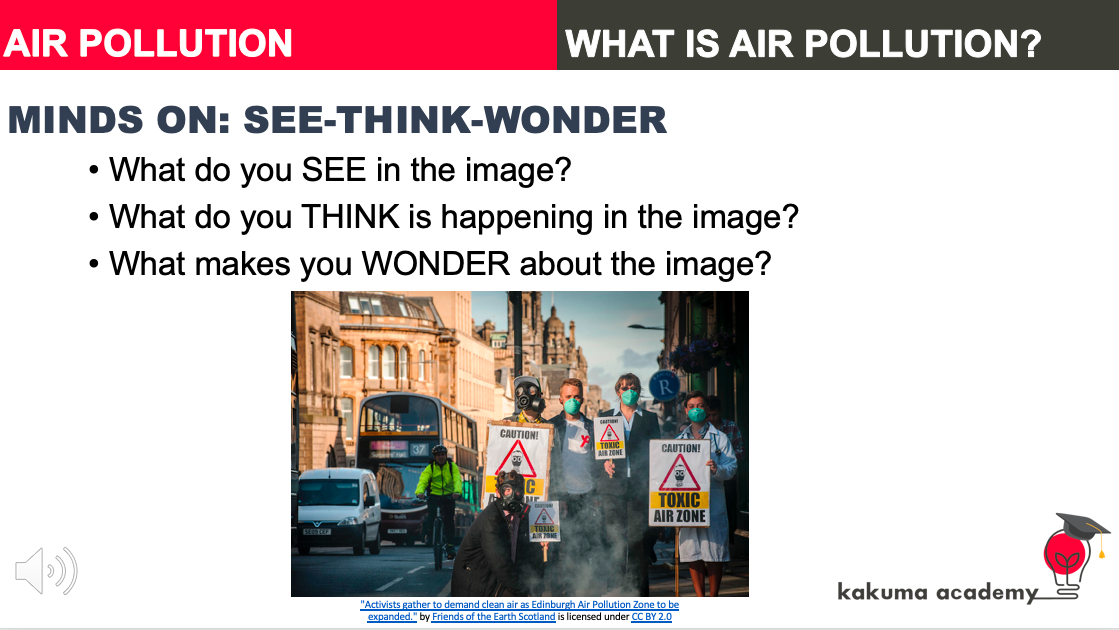
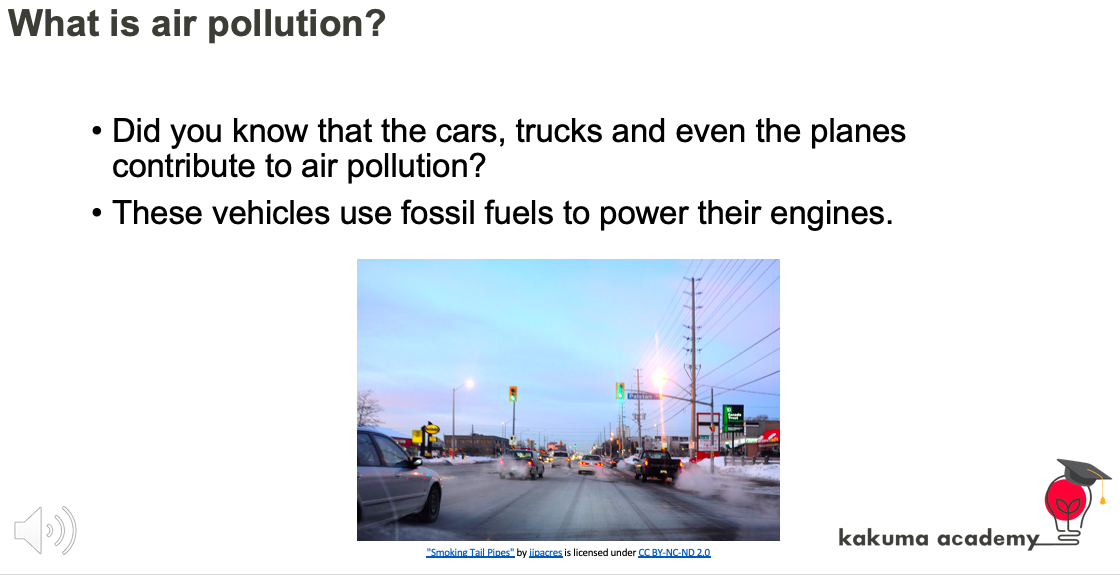
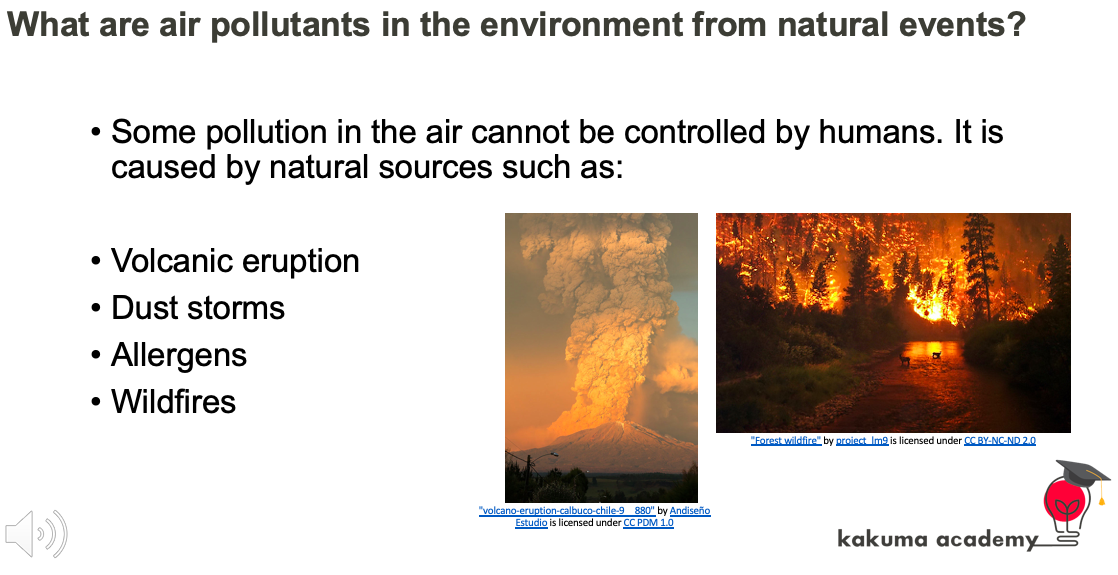
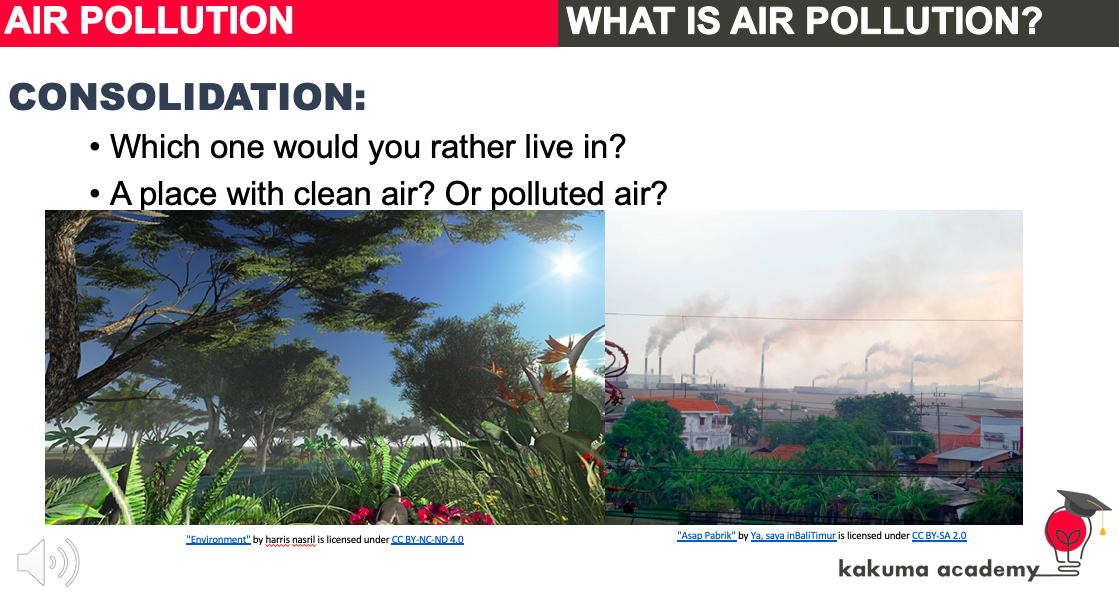
Check out the Powerpoint here.
I ask the students how I presented the photos and where I got those.
Then, I introduced Creative Commons, which is a “global nonprofit organization that enables sharing and reuse of creativity and knowledge through the provision of free legal tools” (Creative Commons, n.d.).
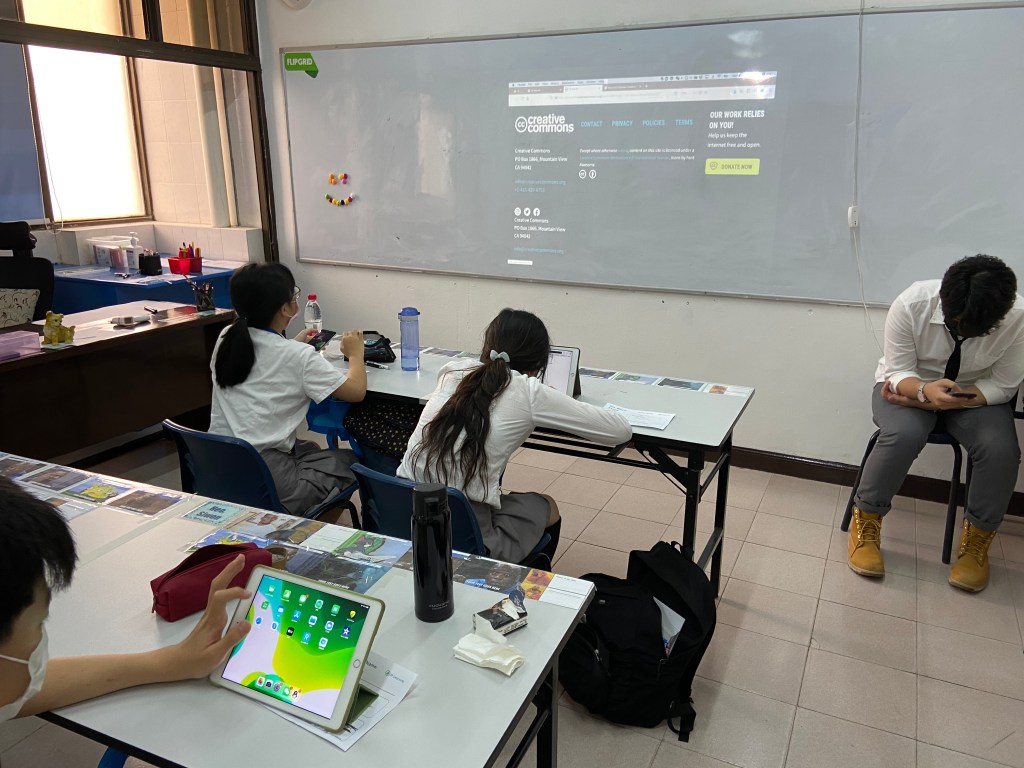
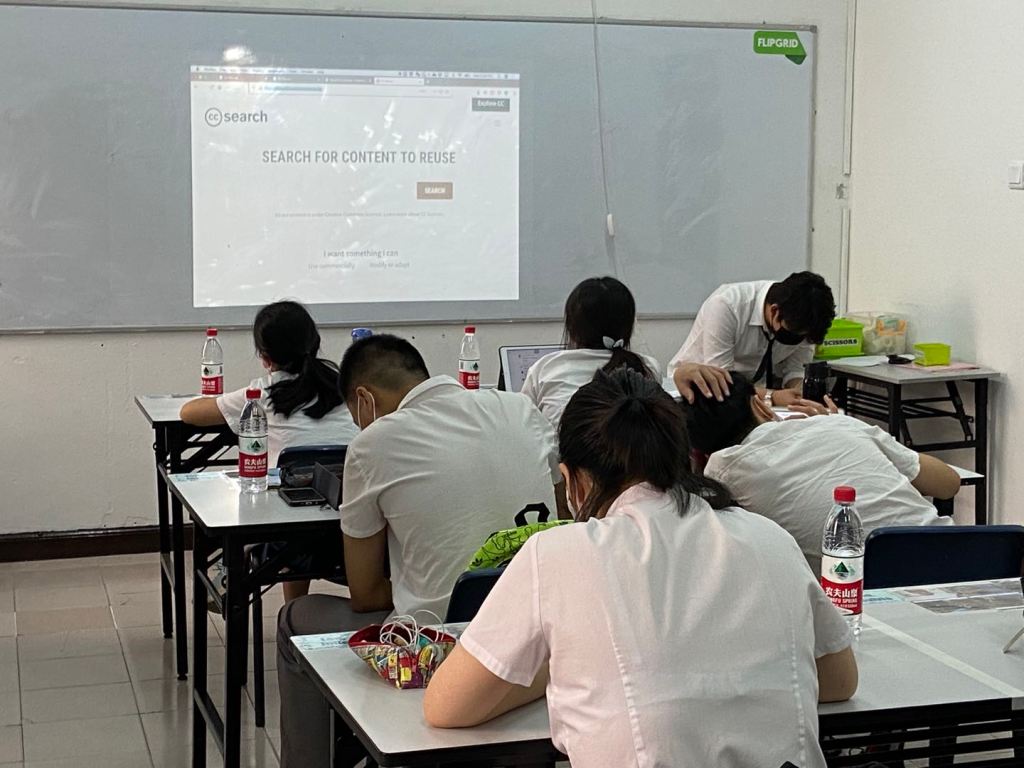
SIX-WORD STORY
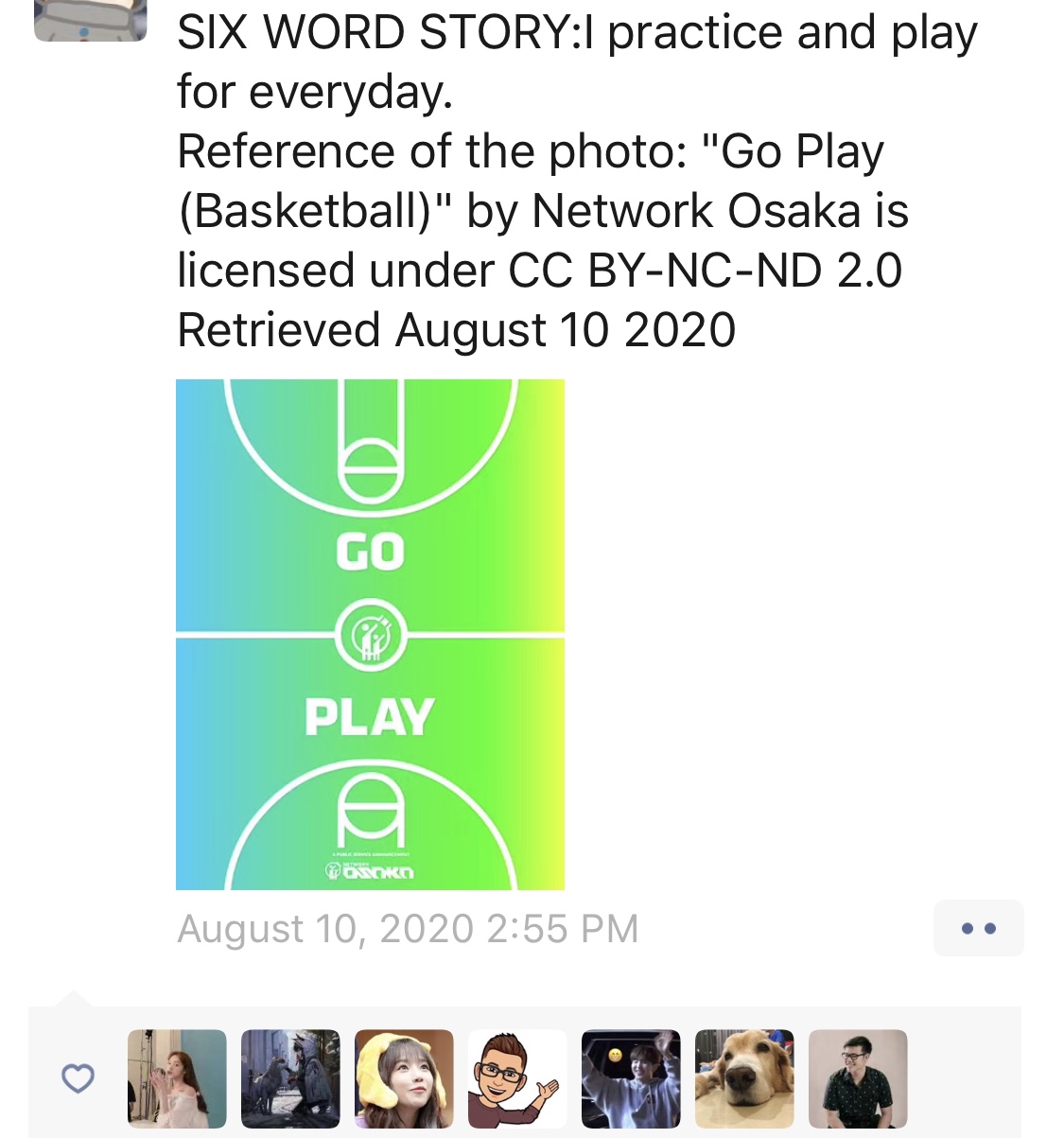
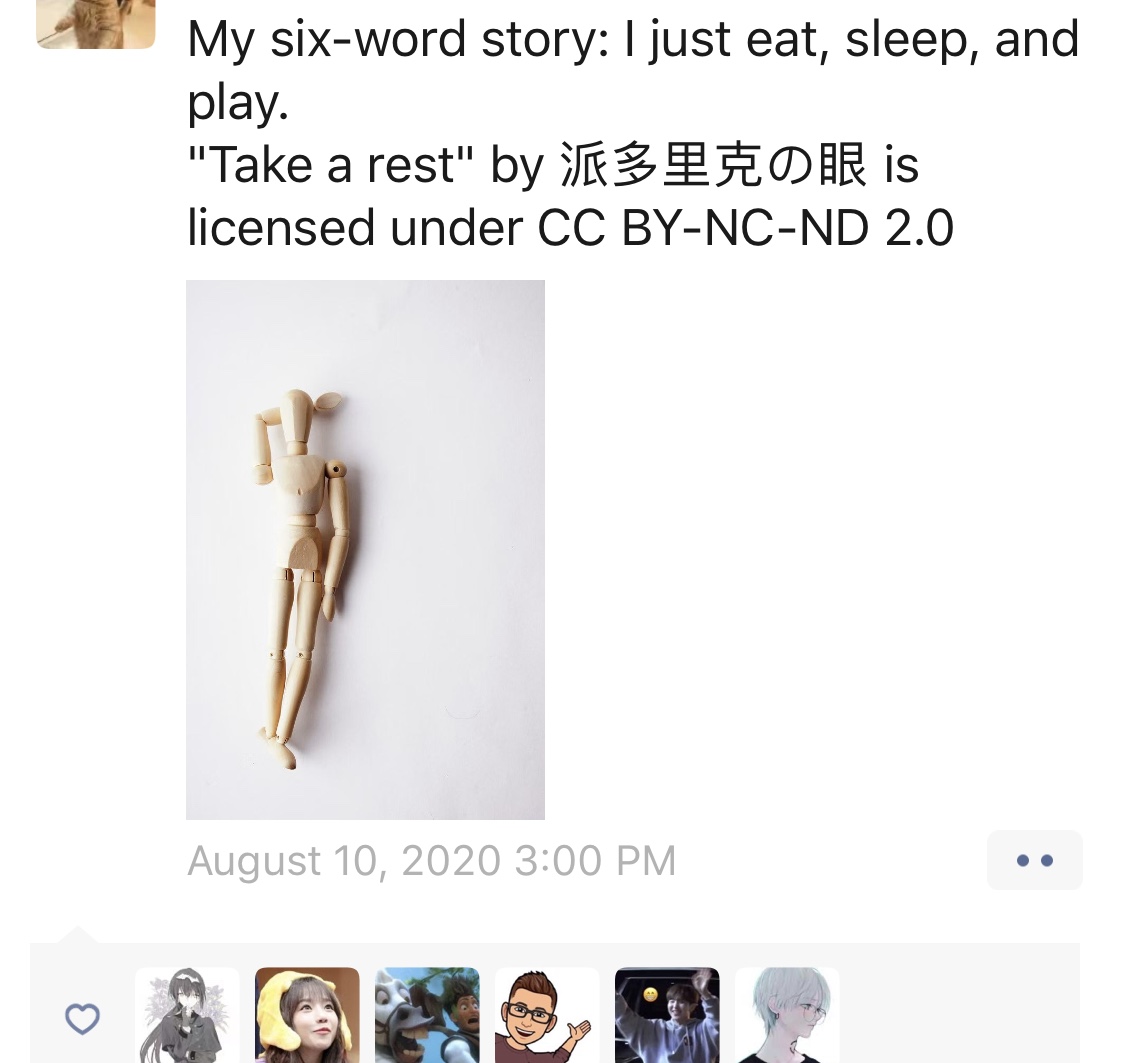
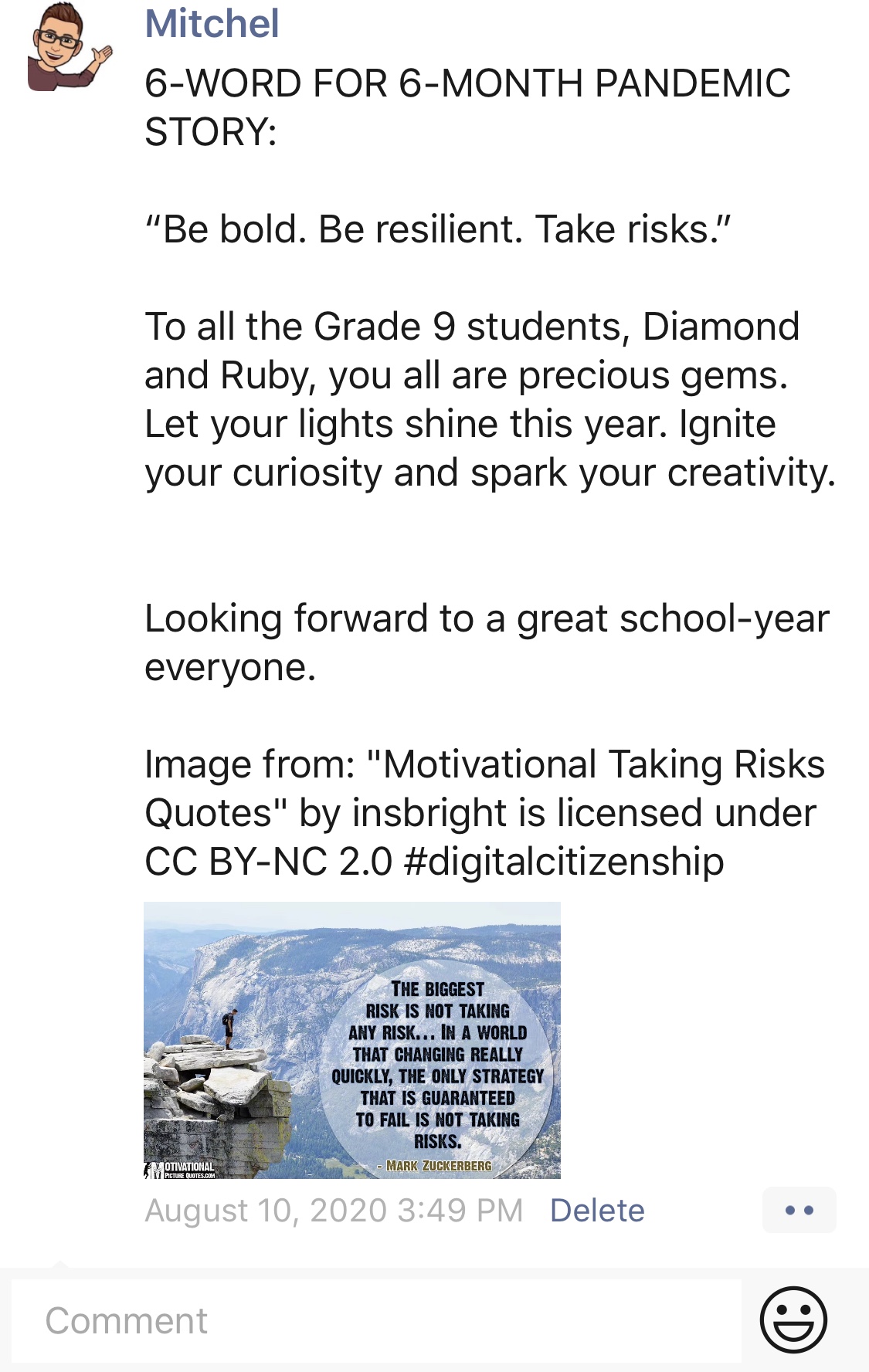
To demonstrate positive and socially responsible contributions online, we did the Six-Word Story.
Check out the Icebreaker activity from 3P Learning.
The students wrote a Six-Word Story of their lockdown or quarantine experience. Then, they searched for an image that will represent their experience from Creative Commons. And then, I asked them to post this in their social media account (WeChat) and put proper referencing.
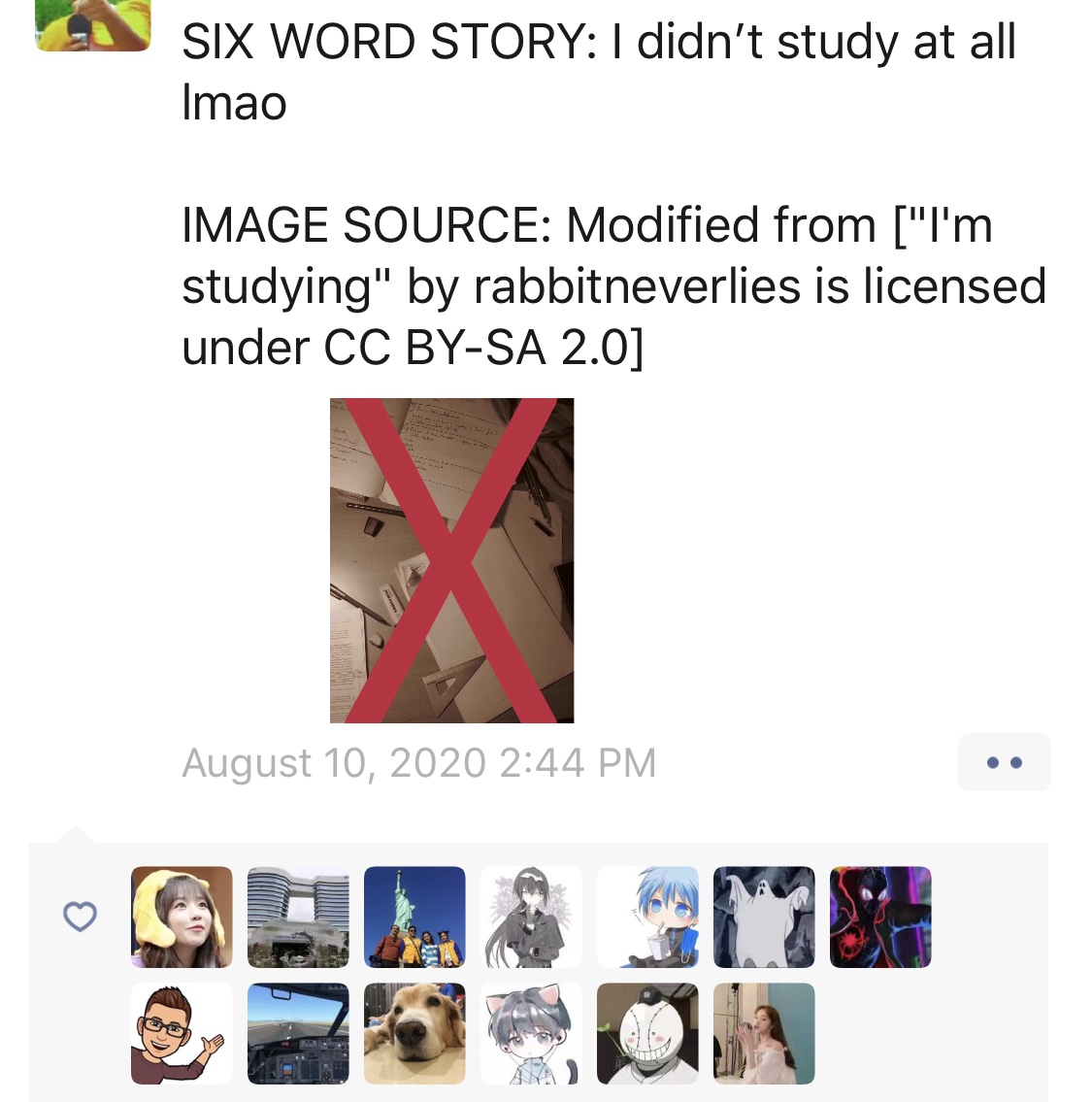
BITMOJI REFLECTION
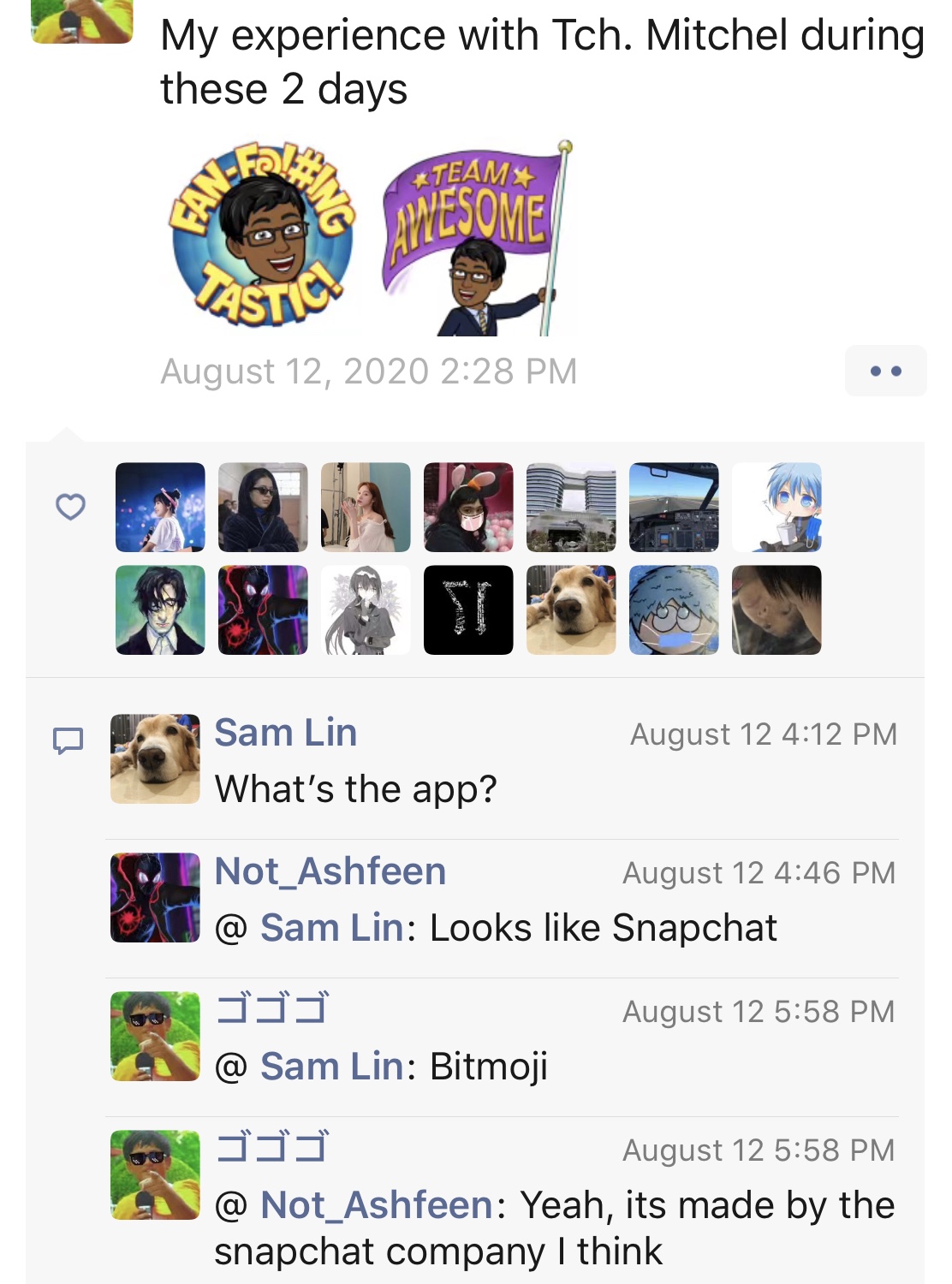
The week ended with a reflection of what they learned throughout our Digital Citizenship Week using a Bitmoji they personally created.
Based from ISTE’s Standards for Students (2016), these activities enables the students to: “cultivate and manage their digital identity and reputation and are aware of the permanence of their actions in the digital world; engage in positive, safe, legal and ethical behavior when using technology, including social interactions online or when using networked devices; and demonstrate an understanding of and respect for the rights and obligations of using and sharing intellectual property” (para. 3).
References:
Creative Commons. (2020, August 28). Frequently Asked Questions: What is Creative Commons and what do you do? Retrieved from https://creativecommons.org/faq/#what-is-creative-commons-and-what-do-you-do
3p Learning. (n.d.). Back to School Icebreakers. Retrieved from https://www.3plearning.com/resources/back-to-school-icebreakers/
ISTE. (2016). ISTE Standards for Students. Retrieved from https://www.iste.org/standards/for-students
#DigCit: Utilizing Creative Commons in the Classroom by Raymond Mitchel Africa is licensed under CC BY-NC 4.0


 MITCHEL AFRICA