
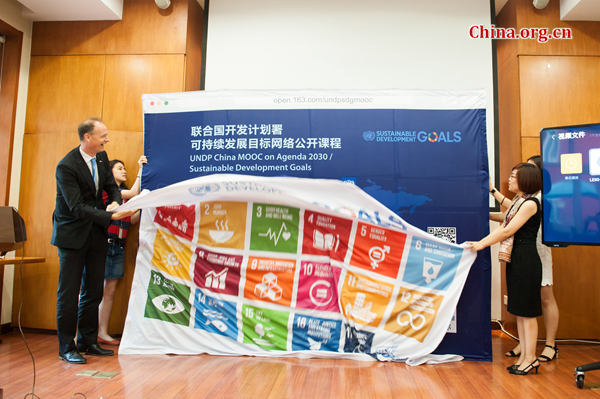
Education has a great impact on the development of every country and today’s education is essential to cultivate the skills of future citizens and leaders in creating innovative solutions and finding ways for a better and more sustainable world. Sustainability and Sustainable Development have been buzzwords for years and countries have been doing tremendous jobs to deepen the understanding of each individual, community, and organization of these concepts and on how these can be achieved. According to UNESCO (2012), sustainability “is a paradigm for thinking about the future in which environmental, social and economic considerations are balanced in the pursuit of development and an improved quality of life” (p. 5). Thus, Sustainable Development means developing a society where people meet their basic needs through the resources available without compromising the needs of future generations. In order to meet this, the United Nations uses the concept of sustainability integrated into education through a social transformation in what is known as Education for Sustainable Development, or ESD.


Education for Sustainable Development aims to address societal challenges through education, which includes various aspects, such as planning, policy development, curricula, and program implementation to help create a more sustainable future. In China, sustainable development is a “fundamental national policy … and has been integrated into the existing curriculum” (Min & Dongying, 2007, p. 185). Among educational institutions in the country, ESD is not a separate subject or taught solitarily but rather, this key concept of sustainability has been integrated into the subjects in schools. In Chinese schools and educational institutions, both formal and informal, ESD has been integrated into the curriculum and implemented since its establishment during the 1992 Rio Earth Summit. It was formally taken into effect through the provision of the UN’s Decade of Education for Sustainable Development in Tongji University in 2005. Since then the concepts of Sustainable Development and sustainability have been implemented and applied in teaching and learning.
In China’s Higher Education Institutions or HEI, numerous campus operations and sustainability-related education and training are provided to students, both for private and public universities. In a study conducted by Wang, Yang & Maresova (2020), students highly perceived and are knowledgeable of sustainability because of their university’s active engagement in sustainability and due to positive stakeholder relationships. Furthermore, textbooks are written, courses are offered and training programs are conducted in relation to sustainability in education and training institutions in the country.

Various programs and projects in the primary and secondary schools have been geared towards integrating and promoting sustainable development also. Basic education in China fully adheres to sustainable development by implementing The National Program for Educational Reform and Development (Institute for Global Environmental Strategies, 2009). The program encourages the idea of sustainability among the students, thus, developing “far‐sighted leaders and decision‐makers, a contingent of highly‐skilled scientific and technological workers in various fields and a large labour force with specific skills and scientific and cultural knowledge” (Institute for Global Environmental Strategies, 2009, p. 15).

China Youth Development Foundation (CYDF) established Project Hope that supports dropout students and those who are at risk of dropping out to continue schooling. The project provides funding for the students, build schools conduct teacher training and launch programs to improve educational conditions in poverty-stricken areas in the country. The UNESCO China EPD-ESD Project promotes quality education in schools that provide holistic development among the students. The project increased scientific knowledge and concerns on the environment, trained teaching staff to understand ESD and its importance and how it can be implemented, improved the quality of education and promoted curriculum reform, organized schools to carry out sustainability-related activities. Moreover, the Project supports communities to develop consciousness on the environment, health, and sustainable development. Another ESD-related project in China is the Environmental Educator’s Initiative. The project has achieved to organize training programs about sustainability, launch the DESD, establish the first international Master’s Degree Program in Environmental Management and Sustainable Development and conduct researches on topics about the environment and sustainable development.
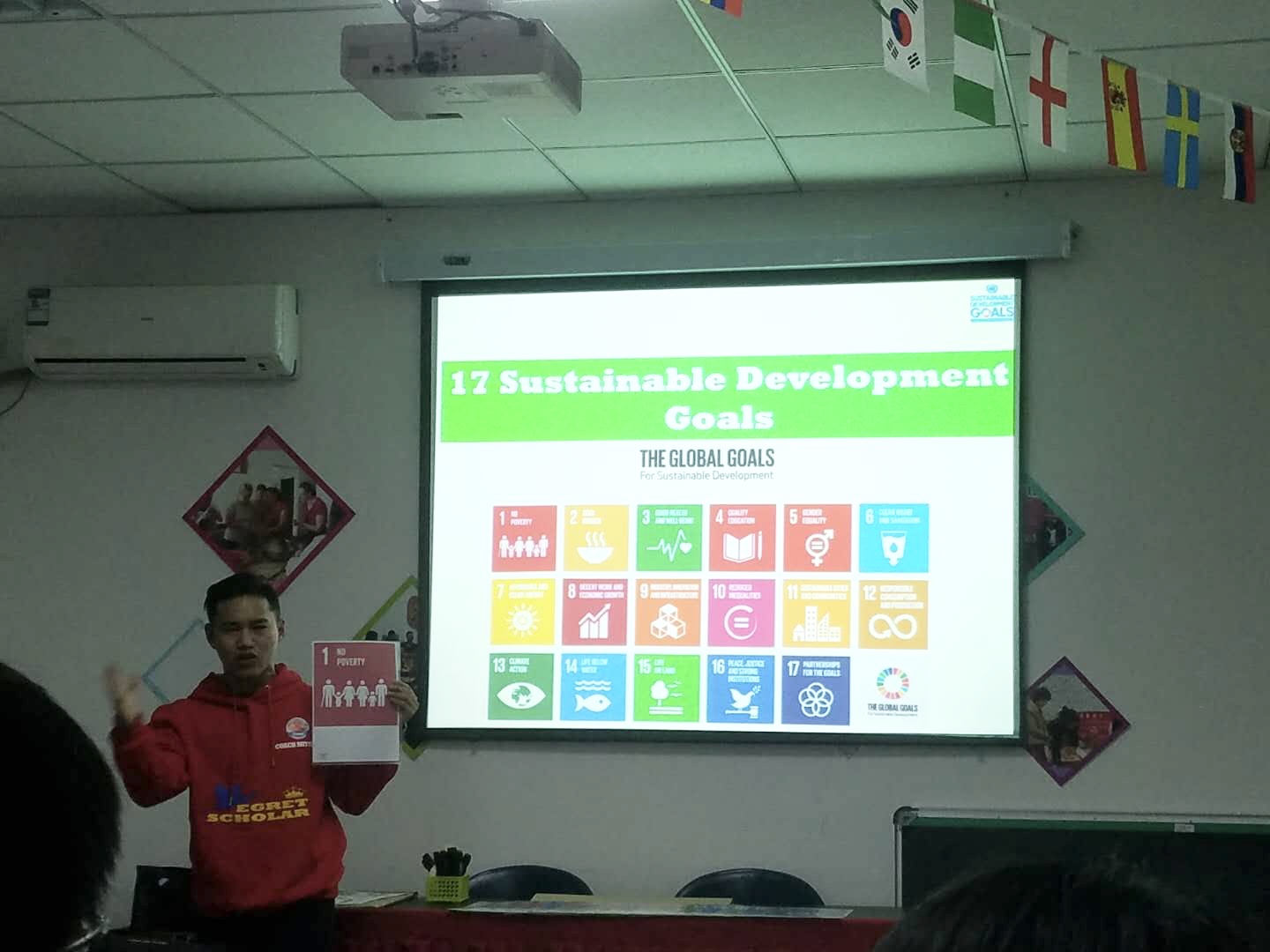

Though China has been actively promoting ESD, there are still some challenges in its full implementation. Wang (2014) argued that those in rural areas still lack education about ESD and in-depth understanding about sustainability is not emphasized enough among workers in industry or agriculture. The Green School program actively engages schools towards ESD through the promotion of environmental awareness of teachers and students in the schools, the management level of the school, and quality education, and disseminated the idea of sustainable development.
As educators, we should be fully aware of the educational programs and policies, both in the local and global contexts. Understanding the history and previous actions taken in accordance with sustainable development in the education sector is essential for us in developing our curriculum and planning on our lessons and topics to be implemented in the classroom. Having sustainability integrated into the lessons and unit plans is deemed important in today’s education to ensure that our students are prepared for now and their future.
References:
Institute for Global Environmental Strategies. (2009). Education for Sustainable Development Practice in China. https://www.iges.or.jp/en/publication_documents/pub/policyreport/en/1453/education_for_sustainable_development_practice_in_china.pdf
Min, W., & Dongying, W. (2007). Education for Sustainable Development in China: A Perspective on Curricula Standards and Geography Textbooks. Internationale Schulbuchforschung, 29(2), 185-197. http://www.jstor.org/stable/43056779
UNESCO. (2012). Education for sustainable development: Sourcebook. https://sustainabledevelopment.un.org/index.php?page=view&type=400&nr=926&menu=1515
United Nations Educational, Scientific, and Cultural Organization. (2012). Preparing for the future- Education for sustainable development [Video]. http://www.unesco.org/archives/multimedia/document-2588
Wang, J., Yang, M., & Maresova, P. (2020). Sustainable Development at Higher Education in China: A Comparative Study of Students’ Perception in Public and Private Universities. www.mdpi.com/journal/sustainability
Wang, T. (2014). Education for Sustainable Development in China. The Journal of Sustainability Education. http://www.susted.com/wordpress/content/education-for-sustainable-development-in-china_2014_06/
 MITCHEL AFRICA